Royal Banquet at Jiren Palace
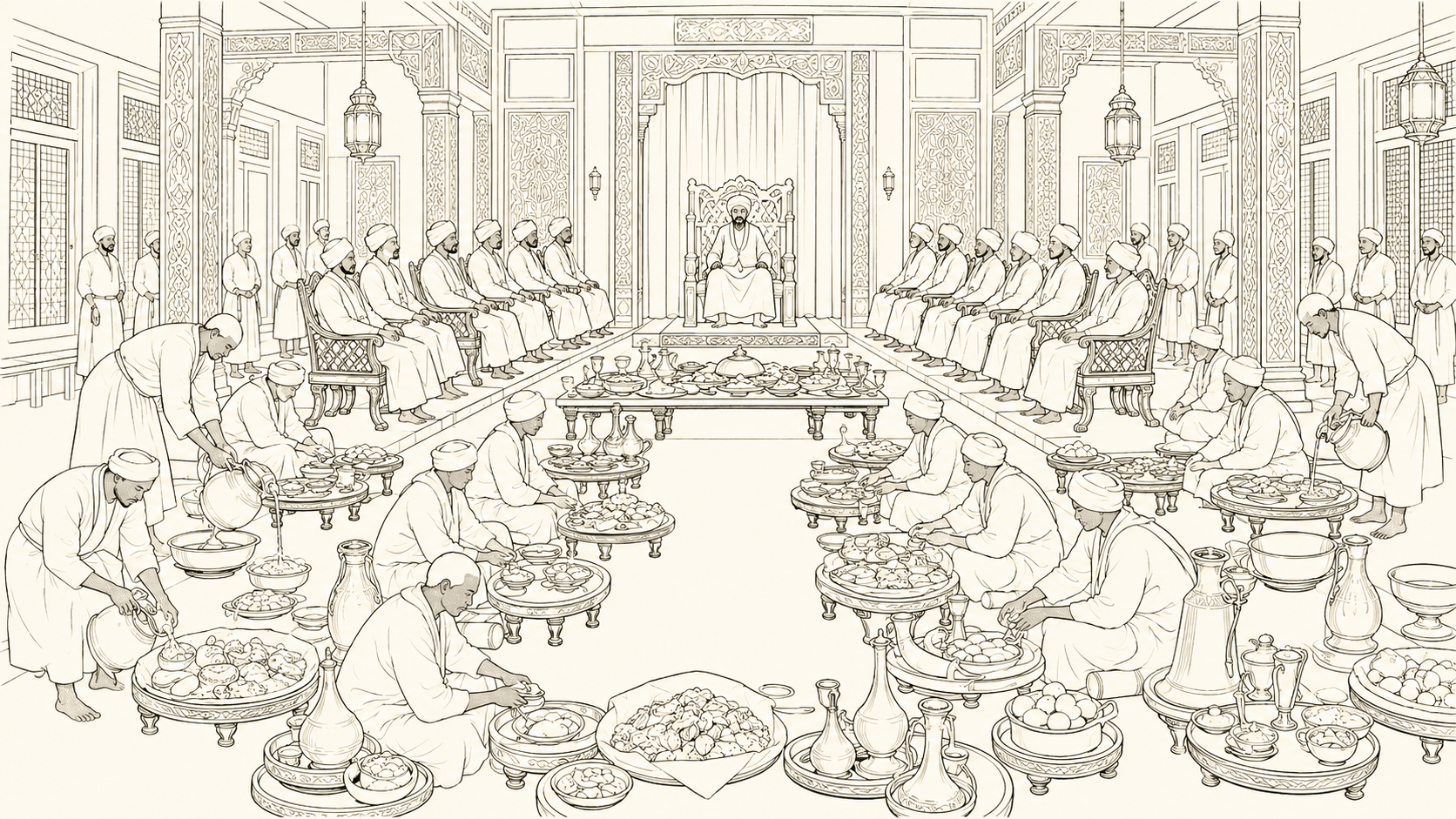
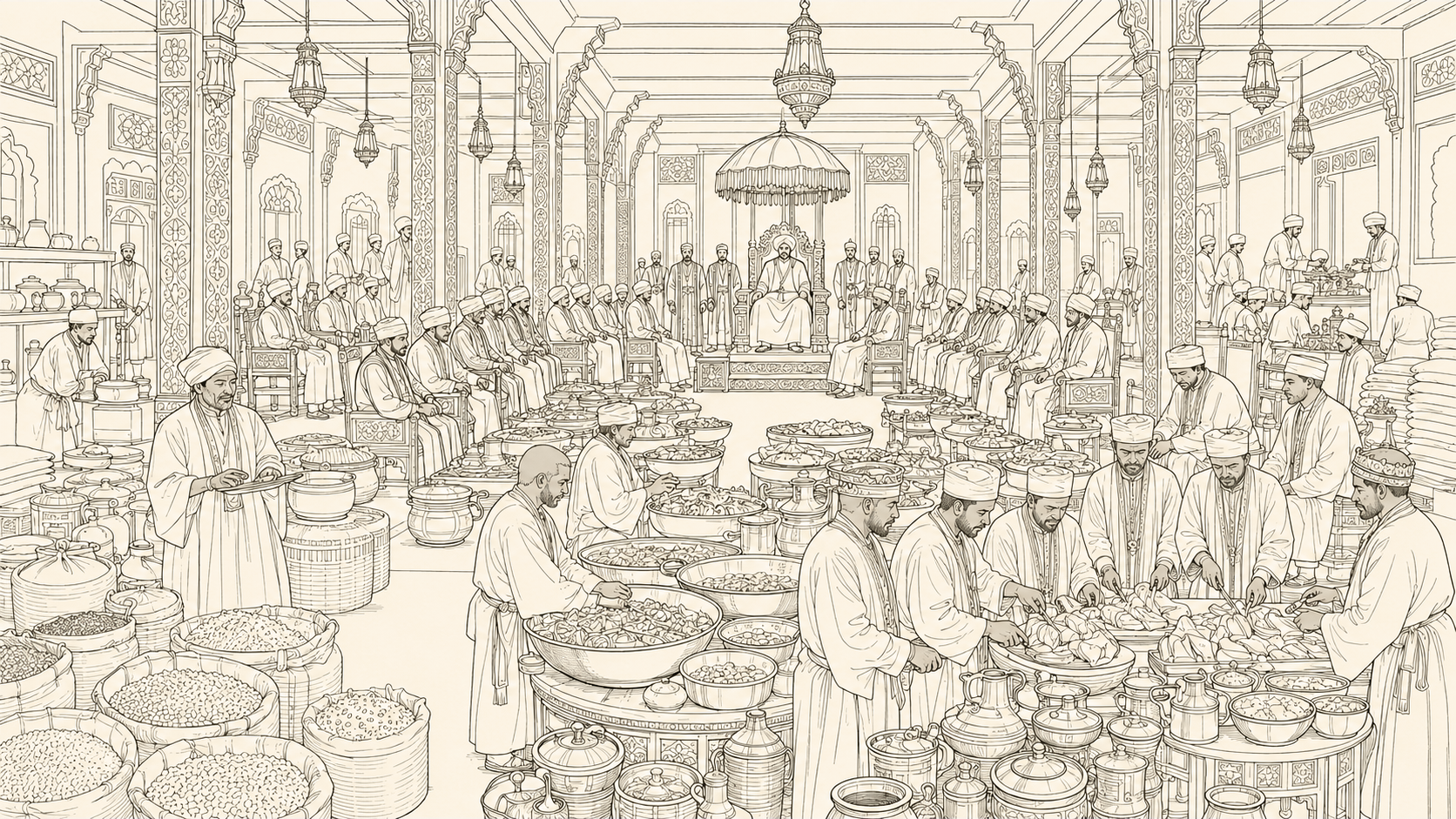
In the late nineteenth and early twentieth centuries, the Masera of Sultan Abba Jifar II at Jiren was more than a royal residence. It was the political and cultural heartbeat of the Kingdom of Jimma, where royal hospitality became a form of government.
A banquet at Jiren Palace was a carefully organized public event. It welcomed local Abba Lafas, Islamic scholars, Jabarti merchants, envoys from neighboring Gibe states, and representatives from the imperial court.
The preparation began long before guests arrived. Palace officials supervised royal granaries, kitchens, livestock, and designated slaughtering areas so the entire meal followed Islamic halal requirements.
The size of the feast displayed the strength of the palace administration. Feeding many guests at once showed that the Sultan controlled land, food, labor, trade wealth, and court discipline.
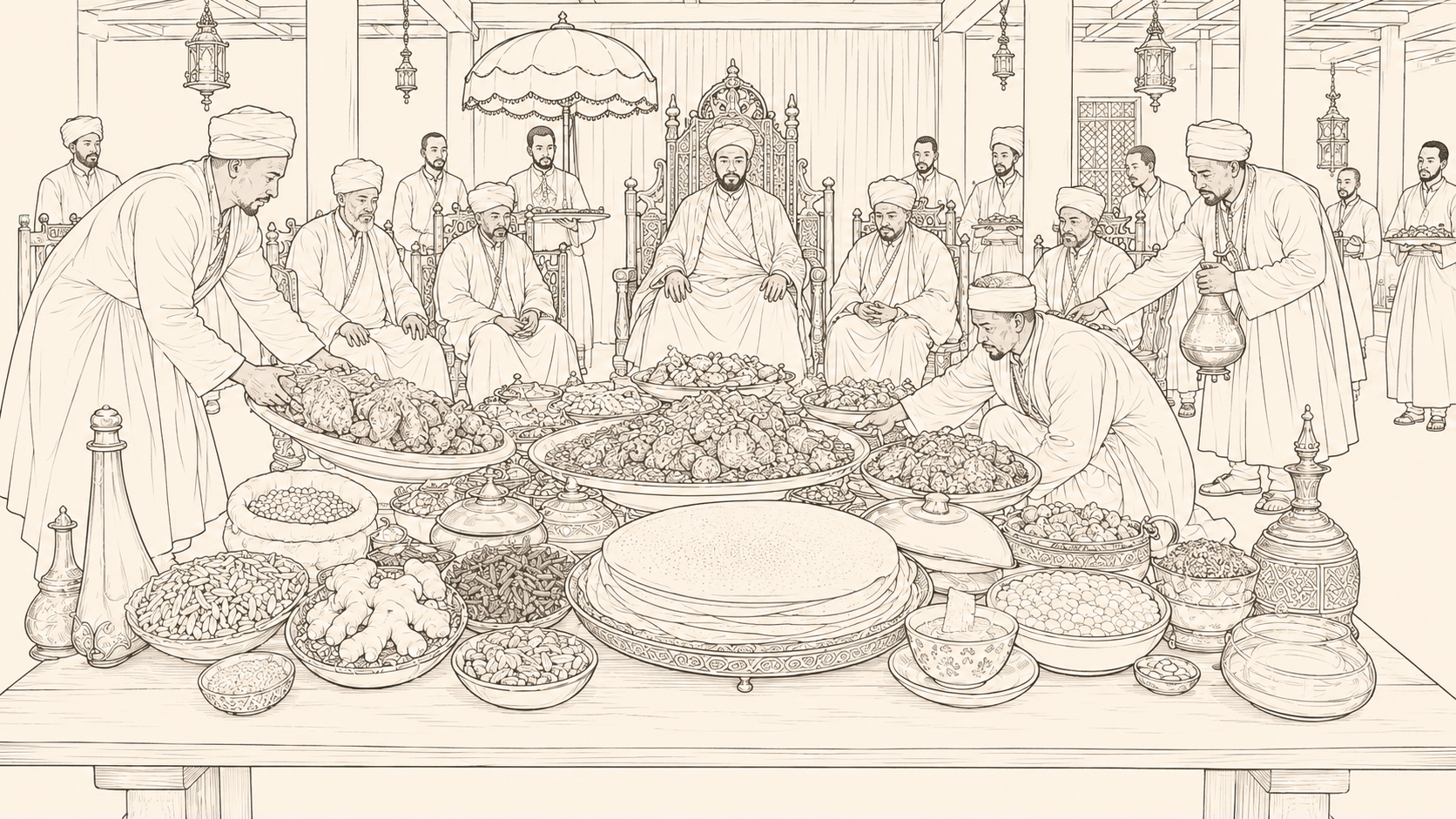
The food served at Jiren Palace reflected Jimma's agricultural wealth and its position on major southwestern caravan routes.
Large portions of beef, mutton, and goat formed the centerpiece of the feast. The meat was prepared according to Islamic dietary law and served roasted, grilled, or cooked into richly seasoned stews.
Fresh injera accompanied the main dishes, along with traditional Oromo foods such as marqaa, clarified butter, honey, dairy products, and other locally produced delicacies.
Jimma's trade connections brought valuable spices into the palace kitchens. Cardamom, ginger, long pepper, and other aromatics gave the royal stews a distinctive flavor and displayed access to luxury goods.
The abundance of food carried a political message: a ruler capable of feeding hundreds of guests demonstrated prosperity, security, and the ability to provide for the kingdom.
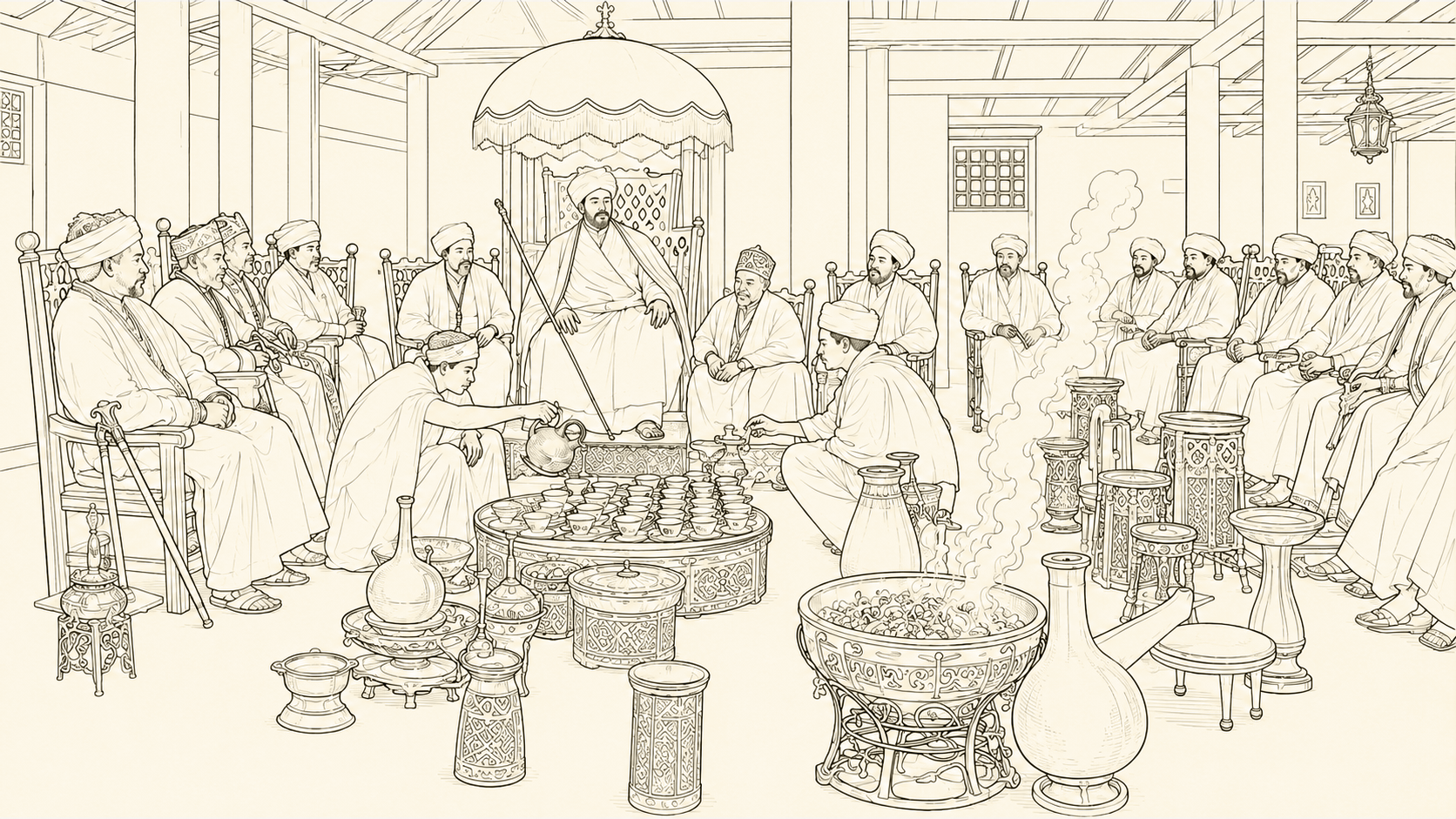
The banquet did not end when the food was finished. After the meal, incense burned on hot coals and filled the wooden reception halls with fragrant smoke.
Coffee was brewed in traditional clay jabana pots and served according to social and political rank. In Jimma, the homeland of coffee, this ceremony was elevated into a refined diplomatic ritual.
This quieter stage of the feast allowed conversation to deepen. Guests exchanged stories, discussed trade, carried messages, and negotiated political relationships in a relaxed but highly structured setting.
Through coffee and incense, the royal banquet shifted from a display of abundance into a forum for diplomacy, legal discussion, alliance building, and royal decision-making.
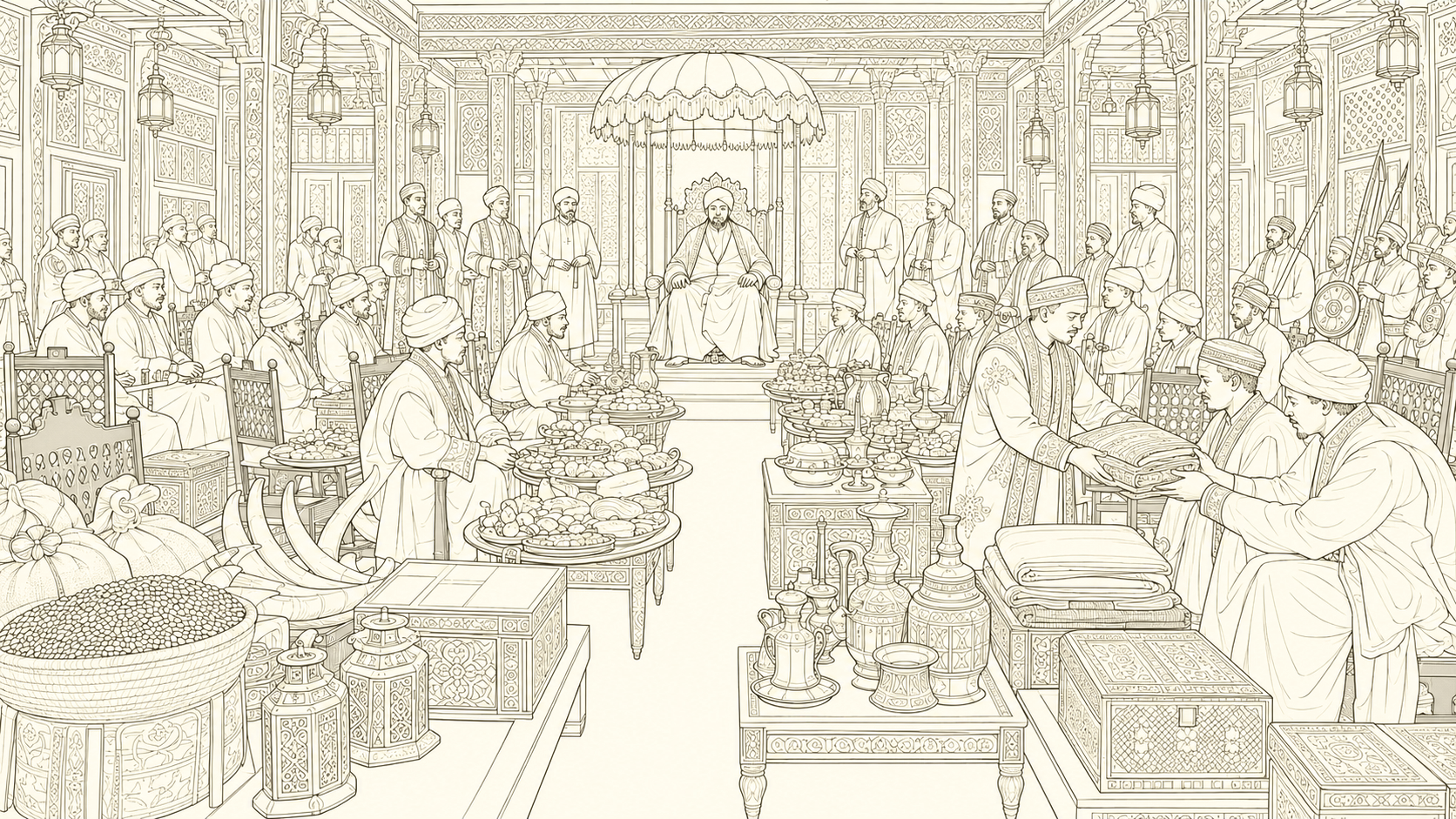
The royal banquet was one of the most important instruments of rule at Jiren Palace. It displayed generosity, rewarded service, and reminded guests that the Sultan was the ultimate provider and protector.
Wealth generated through coffee, ivory, agriculture, and caravan trade was redistributed through these feasts to chiefs, officials, palace guards, religious leaders, and honored visitors.
Foreign relations were also managed through hospitality. Envoys and merchants could be honored with food, seating, gifts, and public recognition, allowing the Sultan to balance diplomacy with authority.
Fine textiles, carved furniture, glassware, porcelain, brass, silver trays, and other imported objects displayed Jimma's connection to wider trade networks and reinforced the prestige of the court.
In this way, feeding the palace was never only about food. It was a public performance of power, loyalty, wealth, Islamic Oromo hospitality, and political order.
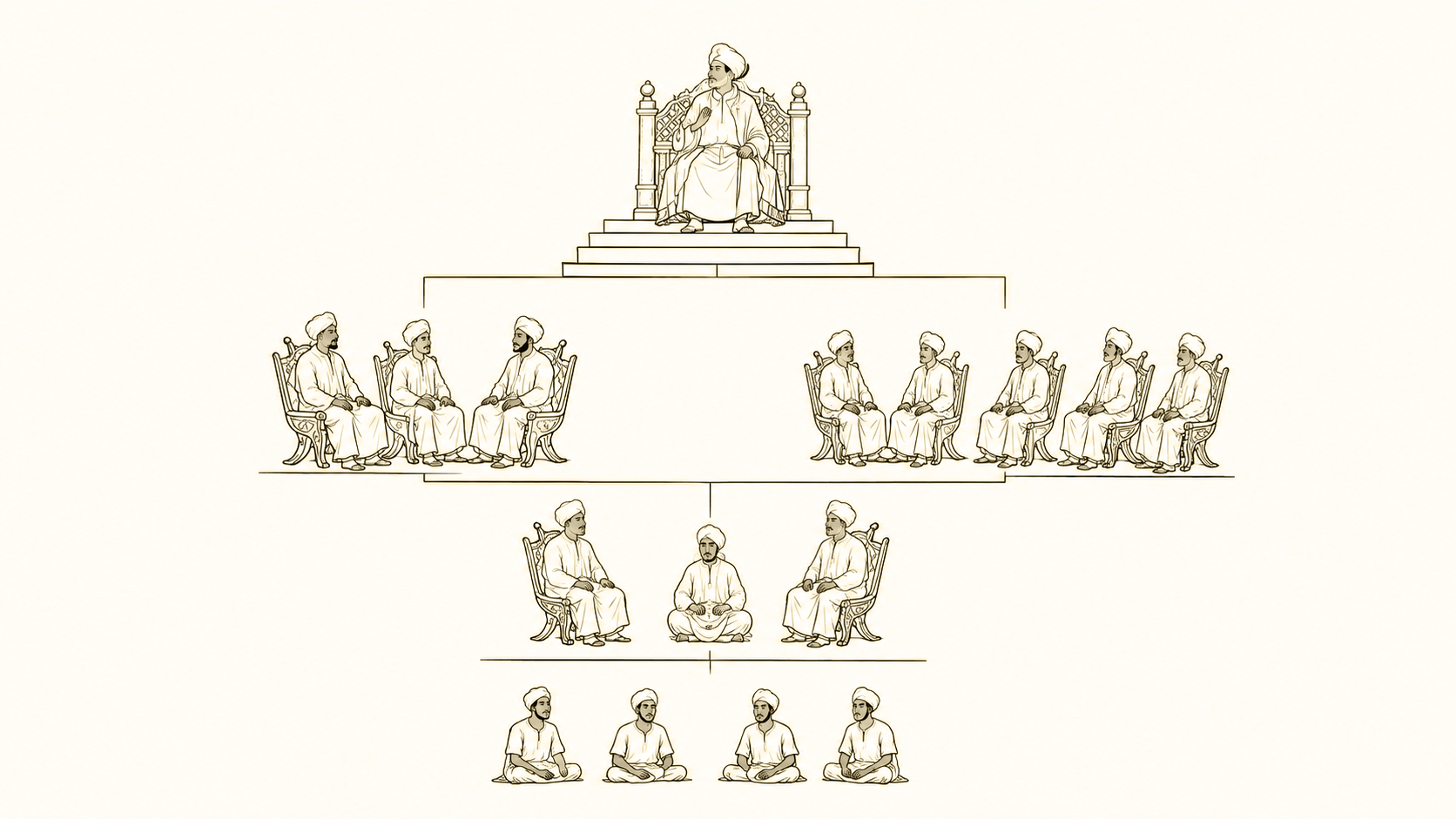
The banquet hall was organized by proximity to power. At the head of the hall, Sultan Abba Jifar II sat on an elevated platform upon his carved Jimma throne.
Closest to the throne sat the inner circle: the Abba Dula, chief administrators, regional governors known as Abba Koro, and the chief Qadi. Their position showed trust, authority, and closeness to the Sultan.
Prominent foreign envoys, neighboring Gibe rulers, and wealthy Jabarti merchants were seated near the royal platform as a sign of diplomatic respect.
Further down the hall sat local chiefs, clan elders, military leaders, and distinguished warriors. A guest's distance from the throne immediately communicated status.
The banquet hall therefore became a visible map of Jimma's political structure, with the king at the apex and every guest placed according to rank.